

Elegir extrusora de film soplado–Máquina para hacer bolsas de plástico
Selecting the right blown film extruder is crucial for the success of your manufacturing operations. This comprehensive guide will help you navigate the complexities of choosing the best extruder tailored to your specific production needs. You will learn about the key production requirements, core components of extruders, types of machines available, technical specifications, and how to evaluate suppliers effectively. Many businesses struggle with inefficiencies and suboptimal production due to improper equipment choices. By understanding the essential factors in selecting a blown film extruder, you can make informed decisions that enhance productivity and profitability. This article will cover the critical aspects of blown film extruders, including production needs, component functions, machine types, technical specifications, and supplier evaluation.
What Are the Key Production Needs to Define Before Selecting a Blown Film Extruder?
Before selecting a blown film extruder, it is essential to identify your production needs. This includes understanding the types of materials you will use, the desired output, and the specifications of the film you intend to produce. By defining these parameters, you can ensure that the extruder you choose will meet your operational requirements effectively.
Which Polymer Resins Are Compatible with Blown Film Extruders?
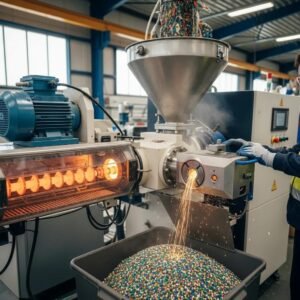
Blown film extruders are compatible with various polymer resins, each offering unique properties suited for different applications. Common resins include:
- Low-Density Polyethylene (LDPE): Known for its flexibility and low density, LDPE is widely used for packaging films.
- High-Density Polyethylene (HDPE): This resin provides greater strength and stiffness and is often used for heavier-duty applications.
- Linear Low-Density Polyethylene (LLDPE): Combining the properties of LDPE and HDPE, LLDPE is ideal for stretch films and bags.
Understanding the properties of these resins helps in selecting the right extruder that can handle the specific material requirements of your production.
How Do Film Width, Thickness, and Number of Layers Impact Extruder Choice?
- Film Width: Wider films require larger extruders with higher output capacities.
- Film Thickness: Thicker films may necessitate more powerful extruders to ensure proper melting and processing.
- Number of Layers: Multi-layer films often require specialized extruders capable of co-extrusion processes.
These factors must be carefully considered to ensure that the selected extruder can produce the desired film quality and meet production targets.
What Are the Core Components of a Blown Film Extruder and Their Functions?

Understanding the core components of a blown film extruder is vital for making an informed purchase. Each component plays a crucial role in the extrusion process, affecting the quality and efficiency of the output.
How Does the Extruder Screw Design and L/D Ratio Affect Film Quality and Output?
The design of the extruder screw and its length-to-diameter (L/D) ratio are critical factors in determining the quality of the film produced.
- Screw Design: A well-designed screw enhances the melting and mixing of the polymer, leading to better film quality.
- L/D Ratio: A higher L/D ratio typically allows for more efficient melting and better control over the extrusion process, resulting in improved output and film consistency. Common L/D ratios for blown film extruders range from 24:1 to 30:1.
Choosing an extruder with the appropriate screw design and L/D ratio is essential for achieving optimal production results.
What Roles Do the Die Head, Cooling System, Haul-off, and Winding Units Play?
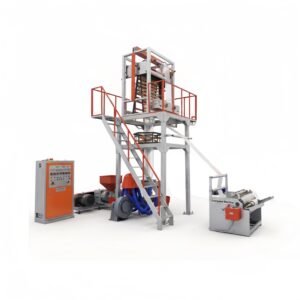
The die head, cooling system, haul-off, and winding units are integral components of a blown film extruder, each serving specific functions:
- Die Head: Shapes the molten polymer into a tubular film.
- Cooling System: Cools the film bubble to solidify it and maintain its dimensions.
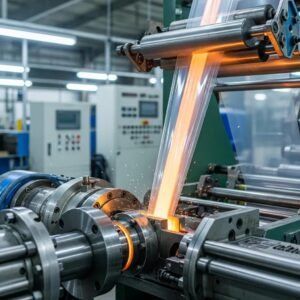
- Haul-off: Pulls the film bubble upward at a controlled speed, ensuring uniform thickness and proper bubble formation.
- Winding Units: Collect the finished film onto rolls for storage and distribution.
Understanding these components helps in evaluating the overall efficiency and capability of the extruder.
Which Types of Blown Film Extruders Best Match Different Business Requirements?
Different types of blown film extruders are available, each designed to meet specific business needs. Selecting the right type can enhance production efficiency and product quality.
What Are the Advantages of Mono-layer Versus Multi-layer Co-extrusion Machines?
Mono-layer and multi-layer co-extrusion machines each have distinct advantages:
- Mono-layer Machines: Simpler and often more cost-effective, these machines are suitable for producing single-layer films.
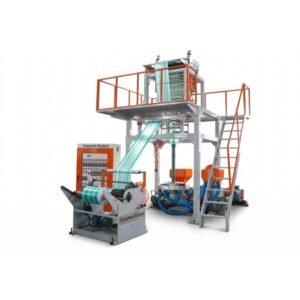
- Multi-layer Co-extrusion Machines: These machines allow for the production of films with multiple layers, enhancing barrier properties, mechanical strength, and functionality. They are ideal for applications requiring specific material combinations, such as food packaging.
Choosing between these options depends on the complexity of the films you intend to produce and your budget constraints.
How Do Twin-Head Blown Film Machines Enhance Capacity and Versatility?
Twin-head blown film machines offer significant benefits in terms of capacity and versatility.
- Increased Output: With two extruder heads and die assemblies, these machines can produce more film simultaneously, improving overall productivity.
- Versatile Applications: They can handle various film types and thicknesses, making them suitable for diverse production needs.
Investing in twin-head technology can be advantageous for businesses looking to expand their production capabilities.
What Technical Specifications and Automation Features Should Be Considered?
When selecting a blown film extruder, it is crucial to consider technical specifications and automation features that can enhance operational efficiency.
How Do Motor Power, Gauge Control, and Automation Improve Efficiency?
Motor power and gauge control are essential for optimizing the extrusion process.
- Motor Power: Higher motor power allows for better processing of thicker materials and higher output rates.
- Gauge Control: Automated gauge control systems monitor and adjust film thickness in real-time, ensuring consistent film quality, reducing waste, and improving product uniformity.
Incorporating automation features can lead to significant efficiency gains and cost savings in the long run.
Despite advancements in automation, maintaining consistent film quality remains a critical challenge, as various defects can arise during the complex blown film extrusion process.
Blown Film Extrusion: Defects, Limitations & Quality Control
This review provides an in-depth look at the key process limitations and (structural) defects encountered in the production of polymer films via film blowing extrusion technology. Film blowing is the most widely used method for producing plastic films across various industries, with its increasing demand driven by flexible packaging needs. Overcoming the challenges of this complex production process is essential for ensuring high quality and meeting the growing demand for modern applications. Common defects such as bubble instability, gauge variations, wrinkles, melt fractures, optical defects, blocking, and surface imperfections like fish eyes are discussed. The most important causes behind these issues are elaborated on, including various molecular and processing parameters.
Structural Defects and Processing Limitations for Polymer Film Blowing Applications: A Comprehensive Review of Conventional and Emerging Sustainable …, I Efimov, 2025
What Are the Energy Consumption and Maintenance Considerations for Long-Term Operation?
Energy consumption and maintenance are critical factors for the long-term operation of blown film extruders.
- Energy Efficiency: Selecting machines with energy-efficient designs, such as variable frequency drives (VFDs) and optimized heating zones, can reduce operational costs.
- Maintenance Needs: Regular maintenance, including screw and barrel inspection, die cleaning, and lubrication, is essential to ensure optimal performance and longevity of the equipment. Understanding the maintenance requirements can help in planning and budgeting.
Evaluating these aspects will contribute to a more sustainable and cost-effective operation.
How to Evaluate Suppliers, After-Sales Support, and Calculate Total Cost of Ownership?

Choosing the right supplier is as important as selecting the extruder itself. Evaluating suppliers based on their support and total cost of ownership can lead to better long-term partnerships.
What Criteria Define a Reliable Blown Film Extruder Supplier and Support Services?
When evaluating suppliers, consider the following criteria:
- Reputation: Look for suppliers with a proven track record in the industry.
- Technical Support: Ensure they offer comprehensive after-sales support, including training, spare parts availability, and technical assistance.
- Warranty and Service Agreements: Check the warranty terms and service agreements to understand the level of support provided.
These criteria will help you identify suppliers that can meet your operational needs effectively.
How to Assess ROI, Scalability, and Future-Proofing of Your Extrusion Equipment?
Assessing the return on investment (ROI) and scalability of your extrusion equipment is crucial for long-term success.
- ROI Assessment: Calculate the potential savings and increased production capacity to determine the financial benefits of the investment.
- Scalability: Consider whether the equipment can be upgraded or expanded to meet future production demands, such as adding additional extruders or upgrading control systems.
Future-proofing your equipment ensures that it remains relevant and efficient as market conditions change.
| Component | Function | Importance |
|---|---|---|
| Extruder Screw | Melts and mixes polymer | Critical for film quality |
| Die Head | Shapes the film | Essential for desired dimensions |
| Cooling System | Solidifies film | Maintains film integrity |
| Haul-off | Controls film speed | Ensures uniform thickness |
| Winding Unit | Collects finished film | Facilitates storage and distribution |
Blown film extruders are complex machines that require careful consideration of various factors. By understanding the key production needs, core components, types of machines, technical specifications, and supplier evaluation criteria, you can make informed decisions that enhance your business’s operational efficiency and product quality.
Extrusor de Film: Mejora del Enfriamiento en la Ciudad de El Alto Bolivia
**Extrusor de Film:
Soluciones Innovadoras para la Producción de Bolsas de Plástico
¡Hola! Soy un profes